"Coffee is perishable. Your e-commerce strategy shouldn't be."
Let's be direct: Shopify is one of the best e-commerce platforms available for specialty coffee brands. It's flexible, scalable, and has a rich ecosystem of apps built exactly for the complexity of selling consumables online. But it was not designed with a coffee roaster in mind by default — and that gap is where most roasters quietly bleed revenue, reputation, and recurring customers.
This post isn't a Shopify teardown. It's a field guide. Written for roasters who are considering the platform, or who are already on it and sensing that something isn't quite right in their operations. We're going to walk through the five most consequential challenges of selling perishable coffee on Shopify — and give you the architecture to solve each one.
Challenge 1: Inventory logic wasn't built for a product that ages
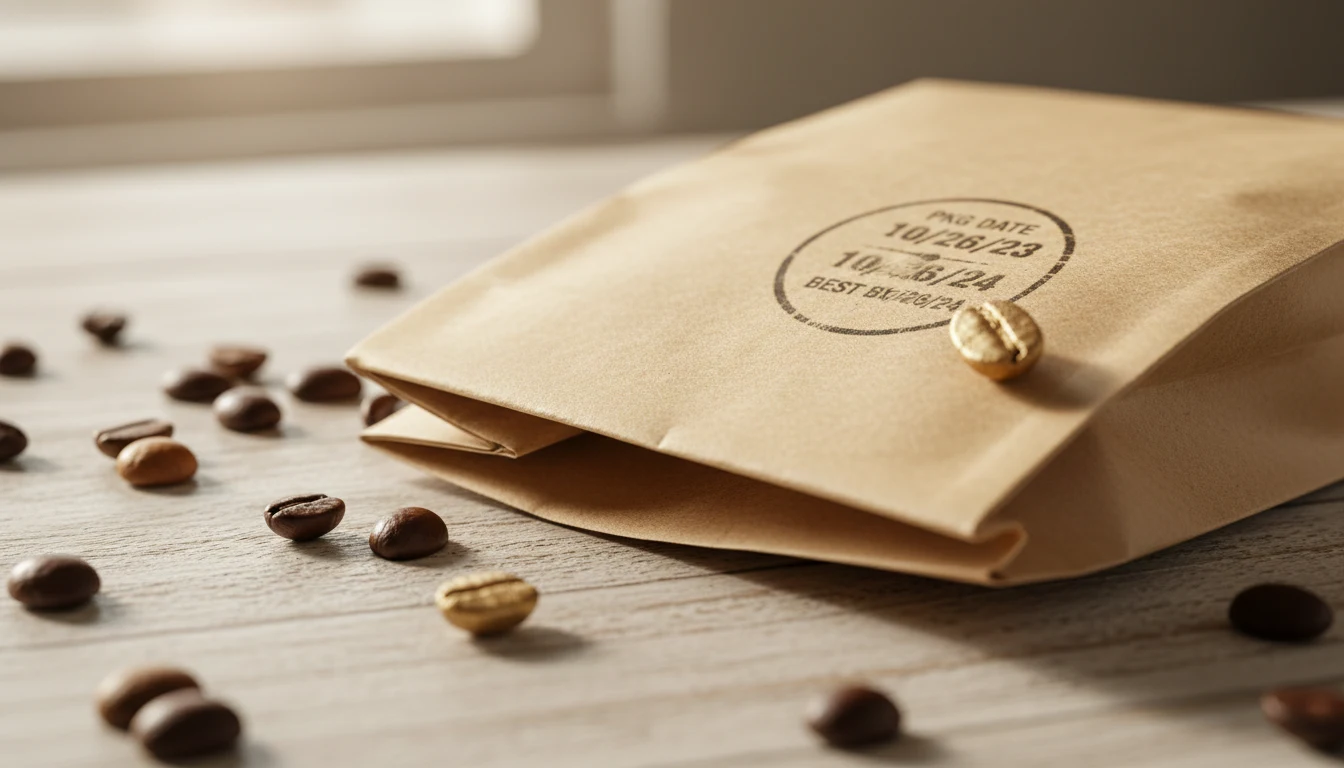
Shopify's native inventory management counts units. It doesn't understand that a 12oz bag of your Ethiopian Heirloom roasted on Monday is a fundamentally different product than the same bag roasted three weeks later. The clock starts ticking the moment coffee leaves the roaster — and your e-commerce stack has no idea.
This creates a subtle but serious problem: you can be "in stock" and out of fresh product at the same time. Customers who receive stale coffee don't file a formal complaint. They just don't come back.
Key data points: average US ground shipping is 7–10 days transit time, and approximately 80% of specialty coffee flavor compounds degrade within 30 days post-roast in standard packaging. Those numbers together define your operational window.
The architectural solution is twofold. First, implement a roast-date tagging system — either through Shopify's metafields or a third-party inventory app — so every product variant carries a roast date visible to both your fulfillment team and your customer. Second, build a freshness window rule into your fulfillment flow: any bag older than X days gets flagged for batch discount or donation before it ever ships.
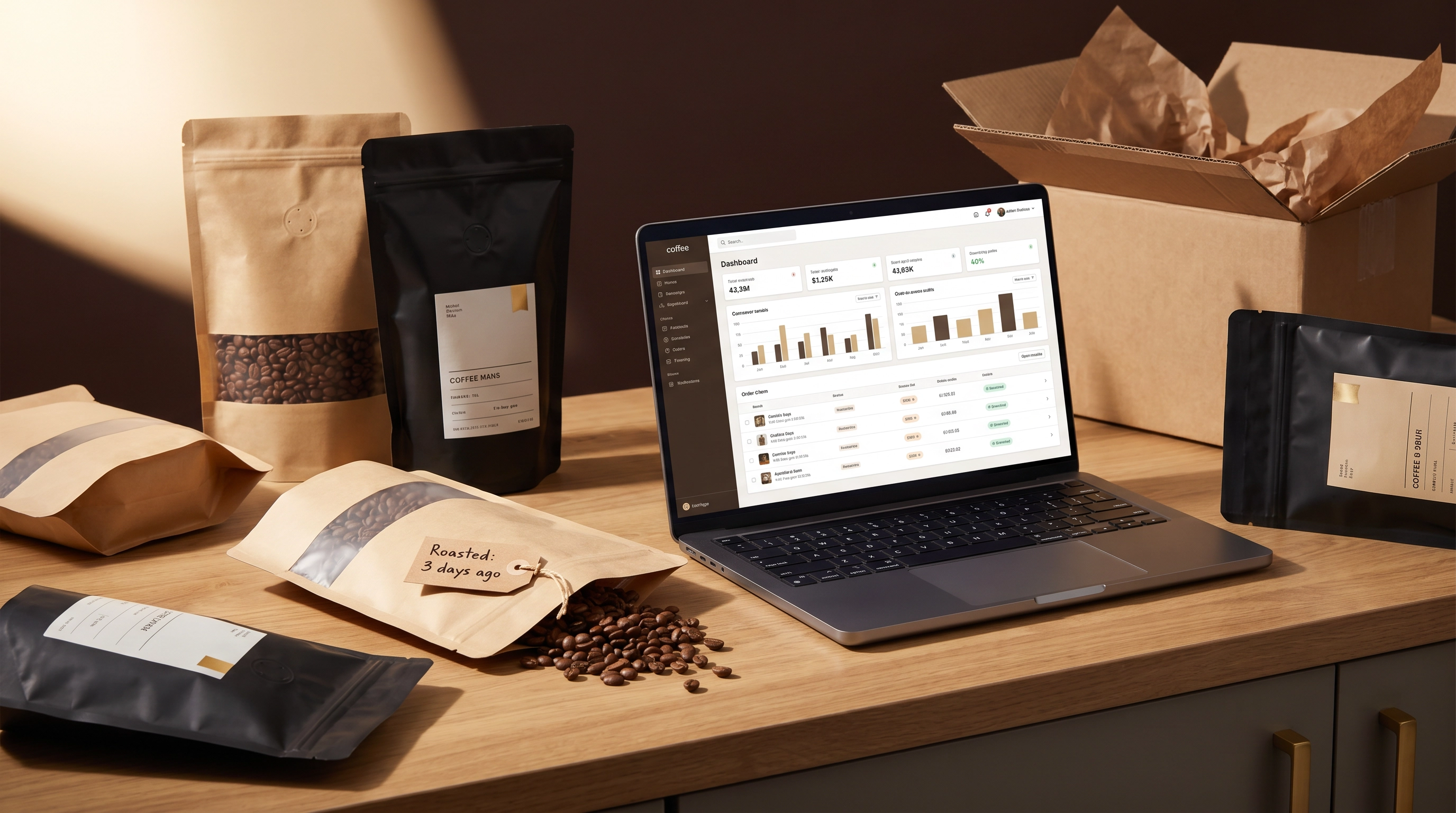
Roaster's fix: Apps like Freshly Commerce or custom Shopify metafield configurations let you surface roast dates on product pages. Transparency here doesn't undermine premium pricing — it reinforces it. A customer who can see "Roasted: 3 days ago" trusts you more, not less.
Challenge 2: Subscriptions sound simple until they meet your production schedule
Subscription commerce is the single most powerful lever a coffee brand can pull for revenue stability. Monthly Recurring Revenue (MRR) allows you to plan green coffee purchases, schedule roast days, and manage labor with precision. But the gap between "we have a subscription program" and "our subscription program actually works at scale" is wider than most roasters expect.
The most common mistake? Letting the customer control the rotation cadence. When every subscriber's schedule starts on their own join date, you end up with a fragmented production calendar that makes batch roasting impossible and inventory forecasting a guess.
The three-frequency rule
Resist the urge to offer every possible delivery interval. Too many options create choice paralysis at conversion. The optimal structure is three frequencies: weekly (heavy drinkers), every other week (the sweet spot for most households), and monthly (occasional enthusiasts and gift subscribers). These three serve your full customer base while allowing batch production.
On Shopify, apps like Recharge, Bold Subscriptions, or Skio handle the recurring billing logic — but the strategic architecture has to be designed by you before the app goes live.
Common mistake: Customer-led rotation — where each subscriber gets a different coffee based on when they joined — makes inventory forecasting functionally impossible. Move to a roastery-led model: you decide which coffee ships that month, for everyone. This lets you buy green coffee at scale, negotiate better pricing, and actually forecast your roast days.
The SKU fragmentation problem
Managing a 12oz retail bag and a 5lb wholesale bag as separate inventory items is a silent source of overselling. The smarter approach is a Master SKU model: manage inventory at the lowest common denominator — the ounce — and use bundle apps like Simple Bundles to derive your retail and wholesale product variants from a single source of truth. When your master inventory drops below the weight threshold for a 5lb bag, it goes out of stock automatically. No manual reconciliation required.
Challenge 3: Packaging is a logistics decision, not just a branding one
If you're shipping nationally — or eventually internationally — the material science of your packaging is a competitive moat or a liability. Most roasters treat packaging as a design problem. Operationally, it's a geography problem.
The data from accelerated shelf-life testing tells a clear story. Bi-laminated packaging (LDPE + Aluminum) has approximately 18 days shelf life at 20°C — risky for national shipping, not viable internationally. Tri-laminated packaging (PET + Aluminum + Polyethylene) reaches approximately 65 days — solid for national, viable for international with planning. That 3.6x difference in shelf life isn't a minor upgrade. It's the difference between having an international business and not having one. Ground vehicle cargo areas routinely run 30°F hotter than ambient temperature, which accelerates degradation further.
High-quality degassing valves are equally non-negotiable. CO₂ off-gassing from freshly roasted coffee is significant — packaging without an adequate valve either bloats or allows oxygen back in. Either outcome destroys the quality window you worked so hard to create.
Shopify connection: Map your packaging type to your shipping zone rules in Shopify. If you only offer bi-laminated bags, restrict international shipping zones at checkout until you've upgraded. It's better to display "Not available in your region" than to ship a stale product and lose a customer permanently.
Challenge 4: Freshness messaging is a conversion lever most roasters ignore
Walk into any specialty café and the staff will tell you exactly when the coffee was roasted, the processing method, and the elevation of the farm. Log onto most roasters' Shopify stores, and you get a product description that could have been written six months ago.
This is a missed conversion opportunity. Freshness is your most defensible differentiator against commodity coffee. Your Shopify store needs to communicate it actively — not assume the customer understands it already.
- Display roast date prominently on every product page, not buried in the description
- Add a "Best enjoyed within" window to set proper customer expectations
- Use collection page filters for "Roasted this week" or "Available now" to create urgency
- For subscriptions, show the specific roast scheduled for the upcoming shipment
- Build an email flow triggered around the 14-day post-purchase mark with brewing tips — reinforcing freshness awareness at the exact moment they're likely enjoying it
The brands that win in specialty coffee e-commerce treat freshness communication as an ongoing conversation, not a one-time product description. Every touchpoint — order confirmation, shipping notification, package insert — is an opportunity to educate and retain.
CRO note: A/B test a product page version that prominently features the roast date against your current default. Most roasters who run this test see a measurable lift in add-to-cart rates — customers who understand freshness are more motivated buyers, not more skeptical ones.
Challenge 5: Scaling beyond your zip code means mastering documentation
The global specialty coffee market reached $42.3 billion in exports in 2023. Capturing even a small fraction of that for your roastery requires treating international logistics as a core competency — not an afterthought. On Shopify, international selling can be enabled with minimal friction on the storefront side. The complexity lives in what happens after checkout.
Roasted coffee and green coffee are regulated differently at nearly every international border. Roasted coffee is classified as a food product — which means FDA Prior Notice for imports into the US, and mandatory labeling requirements in the destination country's language. Green beans face stricter biosecurity scrutiny, often requiring phytosanitary certificates and fumigation documentation.
A single data entry error — a wrong weight, a misspelled origin — can stall an entire shipment at customs. When you're shipping 50 orders to 12 countries on the same day, manual processes are not survivable.
The fix: Integrate a customs automation layer — tools like Starshipit, EasyPost, or Shopify's own Markets Pro pull data directly from your order management system to generate accurate customs documentation. Eliminate manual data entry from this flow entirely. At true global scale, consider regional fulfillment centers that roast in-market, eliminating cross-border friction for your largest international segments.
The metrics that actually matter at scale
As you grow, your business health stops being measured by bags shipped and starts being measured by three numbers: Monthly Recurring Revenue (MRR), Churn Rate, and Customer Lifetime Value (CLV). Your Shopify analytics should be set up to surface these — not just sessions and conversion rate. Great coffee gets people to buy once. A seamless, trust-building experience keeps them subscribing.
The honest summary: Shopify is the right platform — if you build it right
None of the challenges above are reasons to avoid Shopify. They're reasons to approach it with intention. Shopify's app ecosystem, flexibility, and subscription infrastructure make it arguably the most capable platform available for a specialty coffee brand at any stage of growth. The roasters who struggle on it aren't struggling because of the platform — they're struggling because they launched a store without first designing the operational architecture behind it.
The ones who thrive treat their Shopify store as a system: freshness logic built into inventory, subscription cadences that match production capacity, packaging calibrated to shipping zones, and customer communication flows that educate at every touchpoint. That combination — good coffee plus a smart store — is what converts a first-time buyer into a subscriber, and a subscriber into a decade-long customer.
Simplicity scales. But it has to be intentionally designed first.
Frequently Asked Questions
how do you manage coffee freshness and roast dates using shopify inventory?
Because Shopify's native inventory system only tracks unit counts rather than product age, you must implement a roast-date tagging system using custom Shopify metafields or inventory apps like Freshly Commerce. This allows both your fulfillment team and customers to see precisely when a batch was roasted. Additionally, you should establish a strict fulfillment rule where any coffee bag exceeding a specific number of days post-roast is automatically flagged for batch discounts or donation rather than being shipped to a customer.
what is the best delivery cadence or frequency for a coffee subscription?
To avoid choice paralysis at checkout and keep your roasting production schedule predictable, stick to the three-frequency rule. Offer a weekly option for heavy drinkers, an every other week option as the standard household sweet spot, and a monthly option for occasional consumers or gifts. Furthermore, ensure you utilize a roastery-led model (where you choose the rotating coffee variety each month) instead of letting the customer control the specific rotation, allowing you to accurately forecast your batch roast days and buy green coffee at scale.
how does coffee bag packaging material impact shipping zones on shopify?
Your packaging choice directly dictates how far you can safely ship without ruining the customer experience. Bi-laminated packaging (LDPE + Aluminum) only maintains an optimal shelf life for about 18 days, meaning it should be restricted to local or close national shipping zones within Shopify. If you want to scale nationally or internationally, you must upgrade to tri-laminated packaging (PET + Aluminum + Polyethylene), which extends shelf life up to 65 days and withstands the high temperatures found in standard shipping transit.
what is a master sku model and how does it prevent coffee overselling?
A Master SKU model is an inventory setup where you manage your stock based on your lowest common denominator—the ounce or gram of coffee beans—rather than treating individual bag sizes as isolated products. By using a product bundle app like Simple Bundles, Shopify can automatically derive retail variants (like 12oz bags) and wholesale variants (like 5lb bags) from that single source of truth. If your bulk bean inventory drops below the threshold needed for a 5lb bag, Shopify pulls that variant from the store automatically, eliminating manual reconciliation errors.
what documentation is required to sell roasted coffee beans internationally?
When expanding your roastery globally via Shopify Markets, you must automate your customs documentation to handle varying cross-border food regulations. For instance, shipping roasted coffee into the United States requires filing an FDA Prior Notice alongside mandatory localized labeling. To avoid shipments getting stalled at customs due to manual data entry errors, integrate a customs automation layer such as Starshipit or EasyPost directly into your Shopify order management system.
If you are looking for broader strategies on expanding your online presence, don't miss The Shopify Scaling Guide for Indie Coffee Roasters.
Inkroast works with specialty coffee brands to design Shopify stores and subscription systems that actually match how a roastery operates. If you're launching or optimizing, get in touch.