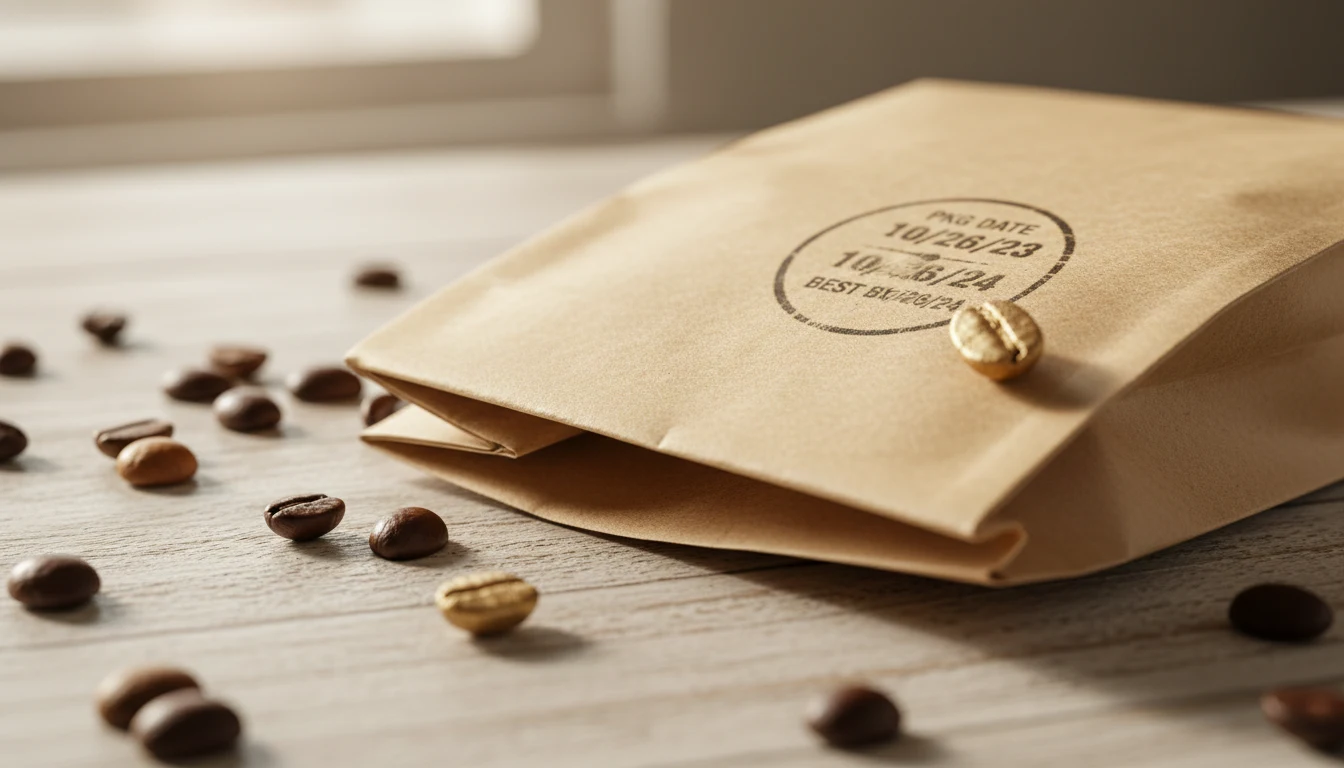
"Small batch" used to signal something specific: careful attention, limited volume, a roaster who knew every bag by hand. Today it's printed on nearly every specialty coffee package on the shelf, which means it no longer differentiates anything — it's become a baseline expectation rather than a reason to choose one brand over another. This post looks at why universal claims stop working and what actually sets a coffee brand apart once "small batch," "artisan," and "craft" have lost their edge — the same shift we mapped out in the 4 elements of a brand-strong coffee label.
Why "Small Batch" and "Artisan" Stopped Being Differentiators
When a claim is true of nearly every competitor in a category, it stops functioning as a differentiator and becomes a baseline expectation instead — the price of entry, not a reason to buy. "Small batch" fits that pattern exactly in specialty coffee: it's common enough now that a buyer scanning a shelf full of bags making the identical claim has no way to use it to choose between them.
What Actually Differentiates a Coffee Brand Now
The replacement isn't a bigger or bolder version of the same claim — it's specificity. A named sourcing relationship ("sourced directly from the Gutierrez family farm since 2019") can't be copied onto a competitor's bag the way "ethically sourced" can. An exact roast profile detail communicates real craft knowledge in a way "artisan roasted" never will. Specificity is ownable precisely because it's concrete — a competitor would have to actually replicate the relationship or the process, not just borrow the phrase. It's the same principle behind building a brand voice that actually sells coffee — specific language beats generic claims everywhere on the package, not just in the tasting notes.
How to Find Your Brand's Specific Detail
In coffee-brand rebrand work, the exercise that surfaces this fastest is asking: what's true about your sourcing, your roast, or your story that a competitor literally could not copy onto their own bag? For one coffee client we've worked with (illustrative framing drawn from real brand-positioning work — see our portfolio at inkroast.com/projects), the answer wasn't a new claim at all — it was surfacing a sourcing relationship the brand already had and had never put on the label. The detail existed; it just wasn't doing any work yet. The same specificity question applies to your visual presentation, too — see how to brief a photographer for your coffee brand for surfacing the same kind of unrepeatable detail in imagery.
Frequently Asked Questions
Is "small batch" still true for most roasters, or is it just marketing?
It's often literally true — most specialty roasters do roast in small batches — but truth doesn't equal differentiation. When a factual claim applies to nearly every competitor, repeating it doesn't help a buyer choose you over them.
What's an example of a specific detail that replaces "artisan" language?
Instead of "artisan roasted," naming the actual roast profile ("light-medium, 11-minute roast, dropped at first crack plus 30 seconds") or a specific relationship ("sourced directly from the Gutierrez family farm since 2019") gives a buyer something concrete and unrepeatable.
Do I need to remove "small batch" from my packaging entirely?
Not necessarily — but it shouldn't be doing the differentiation work alone. Pair it with one specific, ownable detail so the claim has something concrete behind it.
How do I find my brand's specific differentiator if everything feels generic?
Ask what's true about your sourcing, roasting, or story that a competitor literally couldn't copy — a named relationship, an exact process detail, a specific cupping note. If it could apply to any roaster, it's not it.
A claim every competitor makes stops being a differentiator the moment it becomes universal. What remains — the specific, ownable, uncopyable detail — is what actually earns a buyer's choice, and it's exactly the kind of shift we mean when we talk about why winning coffee brands run one system, not two strategies. Follow us for more.