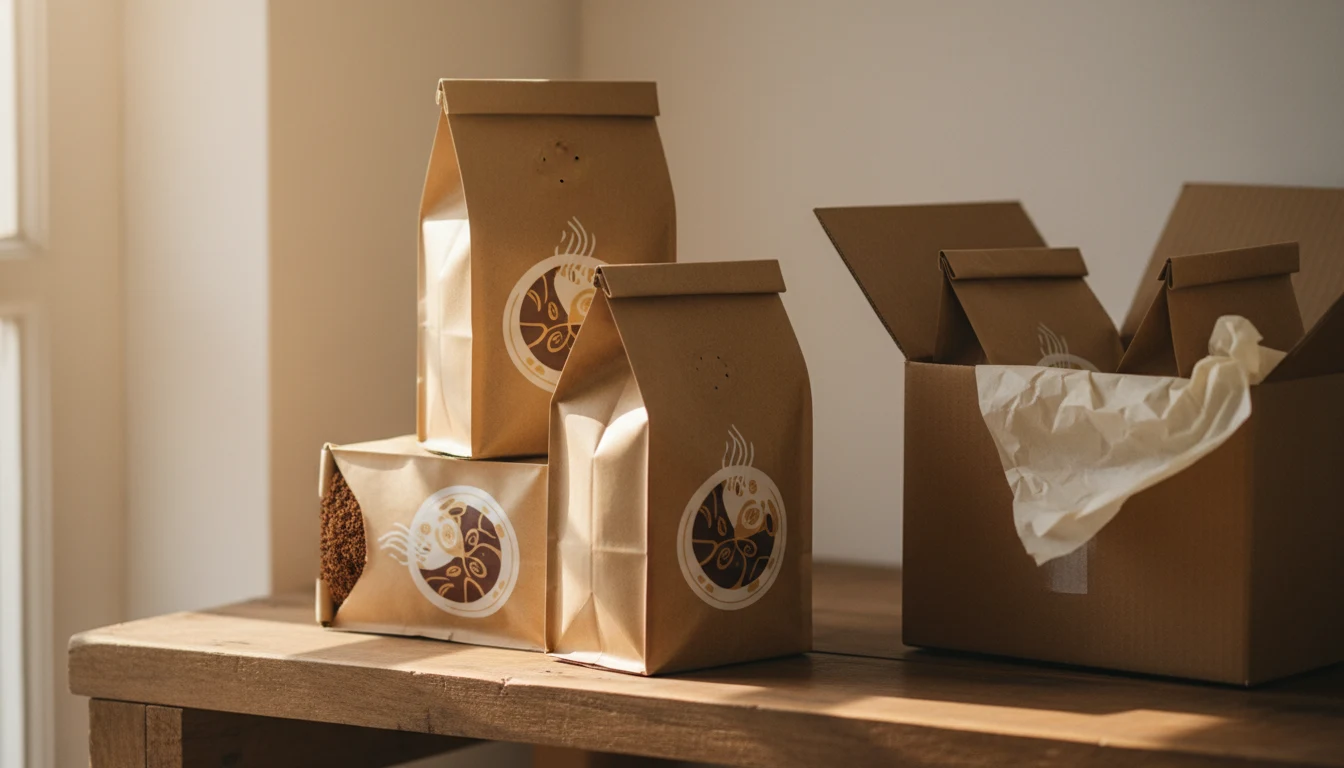
"Fresh roasted" printed on a coffee bag tells a customer nothing they can check for themselves. A roast date does — and that difference between a claim and a piece of proof is exactly what decides whether a first-time buyer, especially a Q4 gift recipient with zero history with the brand, trusts what they're holding enough to order again.
Across the coffee packaging we've designed and audited (see our project case studies at inkroast.com/projects), "fresh roasted" language shows up on nearly every bag. A printed, legible roast date shows up on far fewer. That gap is a trust check most brands never run against their own packaging. It's part of the same pattern behind how small coffee brands build trust that wins customers — a roast date is one specific, checkable piece of that larger trust picture.
"Fresh Roasted" Is a Claim. A Date Is Proof.
Any bag can say "fresh roasted" — it costs nothing to print and nobody can verify it at the point of purchase. A roast date is different: it's a specific, checkable fact. The customer can look at it, do the math, and decide for themselves whether "fresh" is actually true. One is marketing language. The other is evidence.
Why This Gap Matters More With a First-Time Buyer
A returning customer who already trusts a brand will often give "fresh roasted" the benefit of the doubt — they've had the coffee before and know what to expect. A first-time buyer has no such history. For them, a printed roast date isn't a nice-to-have detail; it's the only piece of the label they can actually verify before deciding whether this brand is worth a second order.
Why Q4 Raises the Stakes on This
Q4 is the season most small coffee brands see their highest share of first-time buyers all year — many of them buying as a gift, not for themselves. That means the trust-building work a brand normally does slowly, order by order, has to happen inside a single unboxing moment instead. First-time-buyer trust is also one of the moves behind why coffee brands plateau — a roast date is a small, concrete way to make that trust happen faster.
Gift Coffee and the Repeat-or-Never Decision
A gift recipient who opens a bag with no roast date has one thing to go on: the coffee itself, once brewed. A gift recipient who opens a bag with a clear, recent roast date has two: the coffee, and a specific, verifiable reason to believe it's fresh before they've even opened it. That second signal is often the difference between a one-time gift and a customer who orders their own bag in January.
What a Real Roast Date Check Looks Like
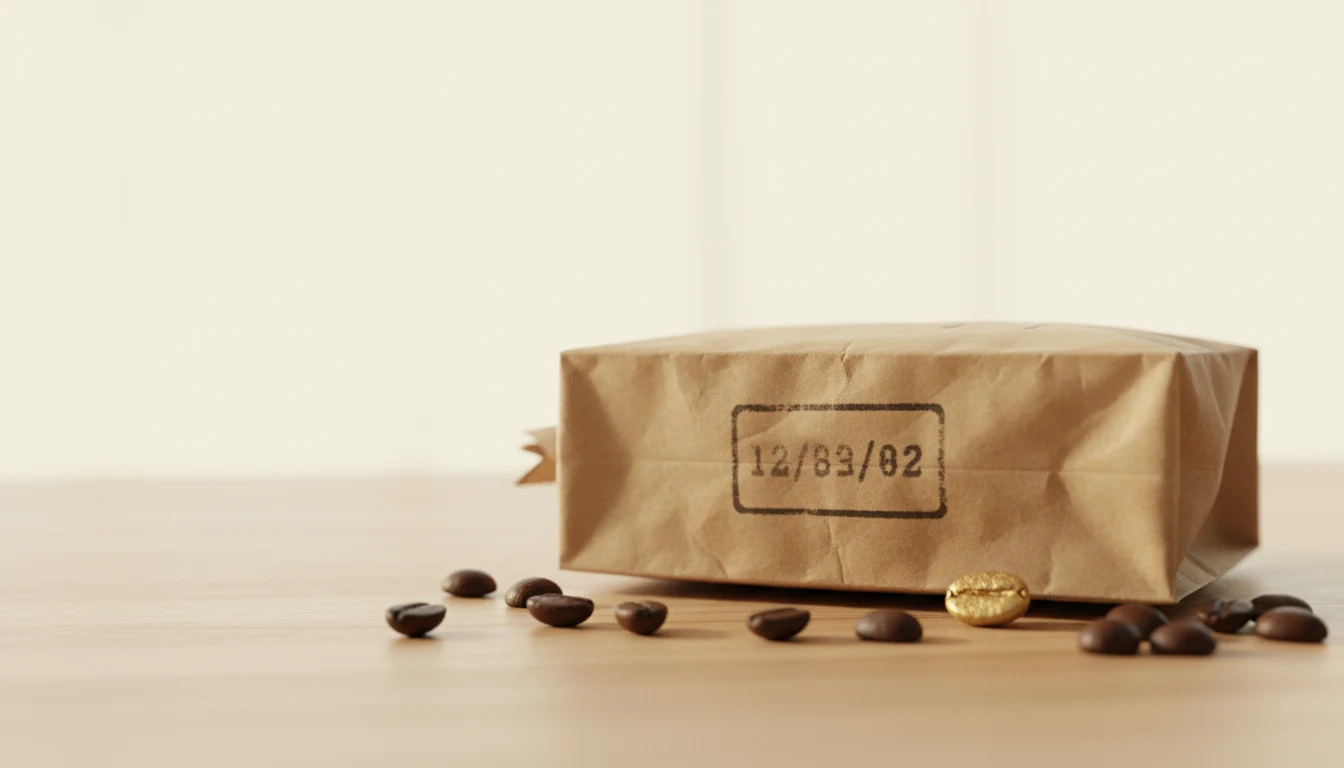
Pull a bag currently on the shelf or in a fulfillment box. Look for a roast date — not a "best by" date months out, not a lot number that means nothing to a customer, an actual roast date. If it isn't there, or it's hard to find, that's the gap. Batch-to-batch date variance ties directly back to the quality-control process that stops working at scale — the same consistency check that keeps the coffee itself reliable is what keeps the printed date honest.
Where the Date Should Live on the Bag
Front-facing or clearly visible on first handling — not on the underside of a bottom-gusset seal where a customer has to hunt for it. If finding the date takes effort, most customers won't bother, and the proof might as well not exist.
What to Do If Your Current Run Doesn't Have One
Adding a roast date doesn't require a full reprint in most cases — a stamped or labeled date on an existing bag design is usually enough for the current run, with a properly designed date field built into the next print order. The fix that matters before Q4 is the stamped version now, not waiting for the ideal version later.
Frequently Asked Questions
Isn't "fresh roasted" enough if the coffee actually is fresh?
No — the coffee being genuinely fresh doesn't help a first-time customer who has no way to confirm it. A printed roast date gives them the same information the brand already has, in a form they can actually verify, which is what "fresh roasted" alone can't do.
What if my roast dates vary batch to batch already?
That's normal and doesn't need to be hidden — a stamped or labeled date per batch is exactly the point. Customers don't expect every bag to be roasted the same day; they expect to be able to see when theirs was.
Does a roast date on the bag cost anything to add?
Adding a stamp or label to an existing print run typically costs very little compared to a full reprint. Building a proper date field into the next packaging order is close to free if it's planned in at the design stage rather than added after the fact.
Should the date be roast date or "best by"?
Roast date, ideally alongside a best-by window rather than instead of it. A roast date is the verifiable fact; a best-by date is useful supporting context, but on its own it reads as a generic freshness claim rather than proof.
Does this matter for wholesale bags too, not just direct-to-consumer?
Yes — a café or retail customer reading a roast date off a wholesale bag is making the same trust judgment a direct-to-consumer buyer makes, often with even less brand history to fall back on if the date is missing.
Conclusion
"Fresh roasted" is language any bag can carry. A roast date is the one piece of evidence a first-time buyer, especially a Q4 gift recipient, can actually check for themselves — and it's often the single detail deciding whether that first order becomes a second one. It's one system, not two disconnected strategies — packaging that earns trust and a store that converts it only work together.
Follow us for more.